

See details about Atomic, in their Form CRS, Form ADV Part 2A and Privacy Policy. See details about Atomic Brokerage in their Form CRS, General Disclosures, fee schedule, and FINRA’s BrokerCheck. Our partners compensate us for advertisements that appear on our site.
Cost Accounting: Types, Methods, Pros and Cons Explained

Some common steps to manage your business’ accounting include a few processes involving a company’s overall record-keeping methods, taxes, forecasting, budgeting, and more. Business accounting refers to bookkeeping and managerial accounting to manage a company’s daily financial activities, while also setting long-term financial goals. From forecasting to invoicing, business accounting works with bigger decision-making and granular level of operations through financial tracking, analysis, recordkeeping, budgeting, and more. Business accounting helps small and mid-sized businesses manage finances, including inventory, cash flow, and profit/loss. This guide explains key concepts, offers management tips, and reviews popular accounting software options.

Free Cost-Volume-Profit Analysis Template
Analysts look for companies that generate strong returns relative to their asset base, which often signals competitive advantages or operational excellence. Profitability may be increased when a business opts for outsourcing, which can help reduce manufacturing costs when production volume increases. Break-even analysis is often a component of sensitivity analysis and scenario analysis performed in financial modeling. Using Goal Seek in Excel, an analyst can backsolve how many units need to be sold, at what price, and at what cost to break even.

(C) Stockholders’ Equity
- Short-term (current) asset amounts are likely to be close to their market values, since they tend to “turn over” in relatively short periods of time.
- As a result, the revenue and expense accounts will start the new year with zero balances—allowing the company “to keep score” for the new year.
- We briefly go through commonly found line items under Current Assets, Long-Term Assets, Current Liabilities, Long-Term Liabilities, and Equity.
- This is done in order to reconcile the difference between EBIT and EBT.
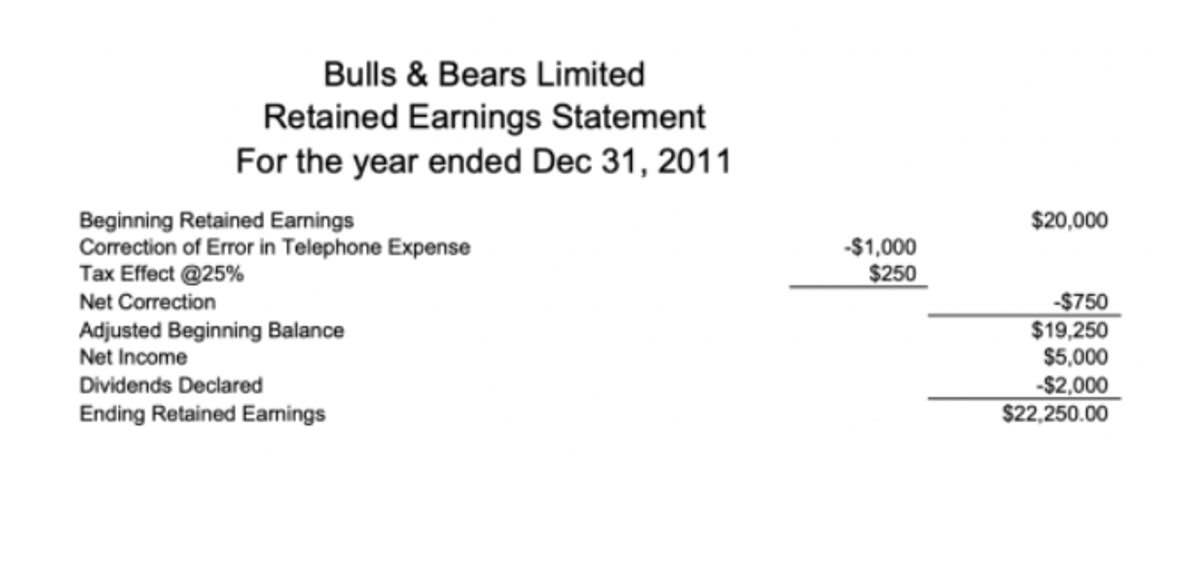
- A separate line within stockholders’ equity that reports the corporation’s cumulative income that has not been reported as part of net income on the corporation’s income statement.
- On December 2, Direct Delivery purchases a used delivery van for $14,000 by writing a check for $14,000.
An alternative expression of this concept is short-term vs. long-term assets. Below is a break down of subject weightings in the FMVA® financial analyst program. As you can see there is a heavy focus on financial modeling, finance, Excel, business valuation, budgeting/forecasting, PowerPoint presentations, accounting and business strategy. Businesses often have other expenses that are unique to their industry.
- When a customer orders a dining room table, Seaside tracks the accounting activity related to the sale.
- Technology streamlines accounting processes by automating tasks like data entry, reconciliations, and financial reporting.
- The field includes a range of functions, from cost accounting to financial planning, with each contributing to a comprehensive understanding of an organization’s financial health.
- Bench simplifies your small business accounting by combining intuitive software that automates the busywork with real, professional human support.
- Either mistake could land you in hot water with the IRS and other regulators.
- If you set up an effective accounting process and understand the basics, you’ll produce useful information that you can analyse quickly.
- So, if your business were to take out a $5,000 small business loan, the cash you receive from that loan would be recorded as a debit in your cash, or assets, account.
- It is the spine of financial management, promoting accuracy, transparency, and compliance.
- The good news is that with the right people, tools, and resources, accounting doesn’t have to be a black hole for your time.
Bookkeeping tasks include maintaining ledgers, recording sales, and reconciling bank statements, which lay the groundwork for accurate Accounting. Accounting offers profound insights into the financial position and performance accounting meaning of a business, which are the two most important indicators of its health. By generating financial statements and recording transactions, monitoring and managing the fiscal vitals for expansion is possible.
A company should organize and track when and where cash goes at all times. Too much debt or having income in overdue accounts receivables can put a company in a negative cash flow. Accounting degrees introduce concepts that may retained earnings be applicable in fields such as public accounting, government financial services, corporate finance, nonprofit financial management, and internal auditing.
Your business, industry, budget and preferences will drive your accounting software choice. Accounting standards are methods that standardize the way individuals and businesses conduct their accounting. Following accounting standards not only ensures that books are kept in an accurate and up-to-date fashion, but that others will be able to understand easily the financial details therein. This is not only useful for continuing business operations at scale but also for government regulators and banks that may want to audit a business’s books.
- Cash (an asset) rises by $10M and Share Capital (an equity account) rises by $10M, balancing out the balance sheet.
- Credited to Luca Pacioli, this system established the basic accounting principles that are still in use today.
- This means timing the frequency and amount of payouts in congruence with other business expenses and payouts.
- You can discern lucrative business sectors, reduce expenses, establish ideal pricing strategies, effectively oversee cash flow, and formulate wise investment choices.
- COGS is often the second line item appearing on the income statement, coming right after sales revenue.
- Though I am not a fan of technical definitions, studying the statement above will give us a better understanding of accounting.
The systematic allocation of the cost of an asset from the balance sheet to Depreciation Expense on the income statement over the useful life of the asset. (The depreciation journal entry includes a debit to Depreciation Expense and a credit to Accumulated Depreciation, a contra asset account). The purpose is to allocate the cost to expense in order to comply with the matching principle. In other words, https://coupons.articlesteller.com/nonprofit-accounting-firm-baker-newman-noyes/ the amount allocated to expense is not indicative of the economic value being consumed.